
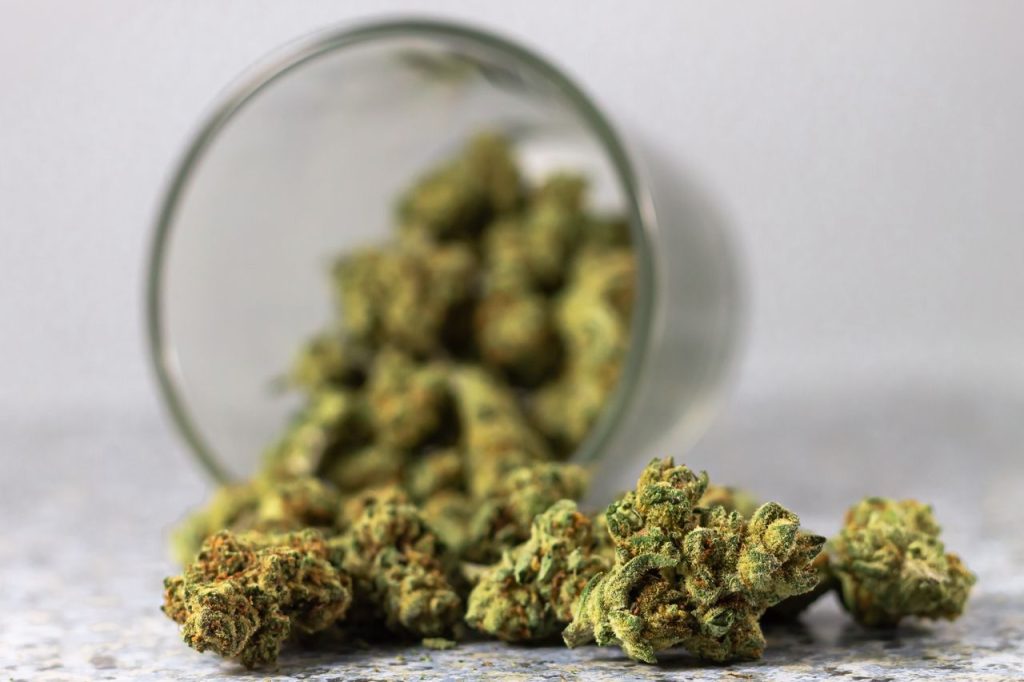
What Are Minor Cannabinoids? CBC, CBG, CBN, and THCV Explained
Walk into any dispensary these days and you’ll spot cannabinoid names on labels that go well beyond THC and CBD. CBG, CBN, CBC, THCV: these abbreviations are showing up more often, and customers want to know what they actually mean.
At UpLift, we get this question constantly, so here’s what minor cannabinoids are and why they matter when you’re choosing a product. If you’d like to see these compounds in real products, browse products at our Milford location or stop by Mt. Orab to talk with our team.
What Are Minor Cannabinoids?
Cannabis contains somewhere between 120 and 150 known cannabinoids. THC and CBD get most of the attention because they’re present in the highest concentrations, but that’s only part of the picture. Minor cannabinoids, including CBG, CBN, CBC, and THCV, occur in much smaller amounts within the plant, yet they still shape how a product looks, smells, and feels. The entourage effect is often used to explain this: the idea that cannabinoids and terpenes work together rather than in isolation, producing an experience that differs from any single compound acting alone.
The main distinction comes down to concentration and how each compound interacts with the endocannabinoid system (ECS), the body’s network of receptors that responds to cannabinoids. THC and CBD are produced in far greater quantities and have been studied extensively. Minor cannabinoids interact with the ECS in more varied, and often less understood, ways.
Ohio requires every batch to be tested by an independent, licensed lab before it reaches a shelf, and CBN is one of the cannabinoids reported by default. Others like CBG, CBC, and THCV are optional, reported when a lab has a reference standard available. As testing has improved, these compounds show up on more labels, which means you get a fuller picture than the THC percentage alone can give you.
CBG (Cannabigerol): The Precursor Cannabinoid
Cannabigerol has earned the nickname “the mother cannabinoid.” Early in the plant’s growth cycle, it exists as CBGA, and as the plant matures, enzymes convert most of that CBGA into the compounds that eventually become THC, CBD, and CBC. Only a small amount stays behind as CBG by harvest, which is why it’s classified as a minor cannabinoid despite being the starting point for the others.
CBG interacts with the body’s cannabinoid receptors, but differently than THC does, and lab research suggests it also works through pathways outside the cannabinoid system entirely. At the doses studied so far, it doesn’t produce intoxication.
Customers who ask us about CBG are usually curious about products marketed for a clear-headed or balanced feel. Individual responses vary based on tolerance, body chemistry, and the rest of the product’s cannabinoid and terpene profile. If you’re curious how CBG shows up in flower or concentrates, our team can walk you through current options.
CBN (Cannabinol): The Cannabinoid Formed by Aging
Cannabinol forms when THC breaks down, which means its concentration actually increases as cannabis ages or sits exposed to light and air. CBG appears early in the plant’s life and THC degrades over time, so CBN moves in the opposite direction from both.
CBN is mildly intoxicating, though considerably less so than THC. You’ve probably heard it linked to sleepiness. That reputation is worth a closer look: early research found CBN on its own didn’t produce strong sedative effects, and drowsiness showed up mainly when CBN was combined with THC. The old “aged flower makes you sleepy” observation may have had more to do with leftover THC than CBN itself.
Because CBN carries some intoxicating potential, we suggest a start low, go slow approach. Our staff can point you toward CBN options in current inventory.
CBC (Cannabichromene): The Overlooked Cannabinoid
Cannabichromene doesn’t get nearly the attention CBG or CBN do, even though it’s actually one of the more abundant cannabinoids in the plant. In Ohio dispensaries specifically, you’ll typically encounter CBC as part of a full-spectrum product rather than as a standalone item, since it’s rarely isolated or added on its own in this market.
CBC interacts with the body’s receptors differently than THC does, working mainly through pathways that aren’t associated with intoxication. It’s considered non-intoxicating, similar to CBD. Most of what’s known about CBC comes from lab and animal research rather than large human studies, so treat any specific claims with caution.
It’s considered non-intoxicating, similar to CBD. It’s also worth flagging that most of what we know about CBC comes from preclinical research, meaning studies conducted in labs or on animal models rather than large-scale human trials, so treat any claims about it with appropriate caution.
THCV (Tetrahydrocannabivarin): The Energizing Cannabinoid
THCV is a close chemical relative of THC, but a small structural difference changes how it behaves in the body, and how much you take matters more here than with most cannabinoids.
At low doses, THCV appears to block the same receptor THC activates. At higher doses, it seems to switch and activate that receptor instead. Human research is limited, but a small oral dose produced no noticeable effect in healthy volunteers, while much larger doses produced mild THC-like effects. The practical takeaway: don’t assume THCV is non-psychoactive. Its effects shift with dose, so start low and go slow is especially relevant.
THCV is most abundant in certain African sativa strains, which is part of why it’s uncommon in mainstream cultivars. You may also see it marketed with appetite-related language, best understood as something users often discuss rather than a guaranteed effect. If you’re new to THCV, our staff can help you figure out a reasonable starting point.
Comparing CBC, CBG, CBN, and THCV at a Glance
Seeing these four cannabinoids side by side helps clarify how differently they behave, even though they all fall under the “minor cannabinoid” umbrella.
| Cannabinoid | Origin/Formation | Intoxicating? | Commonly Associated With |
|---|---|---|---|
| CBG | Converted from CBGA early in plant growth | No (at studied doses) | Clear-headed, balanced feel |
| CBN | Forms as THC oxidizes with age | Mildly | Relaxed feel; often linked to aged flower |
| CBC | CBGA converts to CBCA via CBCA synthase, then decarboxylates to CBC | No | Full-spectrum profile contributor |
| THCV | Structural analog of THC (propyl chain) | Dose-dependent | Often-discussed appetite characteristic, dose-sensitive experience |
Reading Labels Like a Pro: Beyond the THC Percentage
Once you understand what these cannabinoids do, the next step is knowing how to spot them on a label or lab report. This is where a lot of shoppers get stuck, mostly because THC percentage has become the default shorthand for “how strong is this,” even though it only tells part of the story.
What to Look for on Lab Reports and COAs
Every batch sold at a licensed Ohio dispensary passes testing before it reaches the shelf, producing a Certificate of Analysis (COA) that reports cannabinoid content and screens for contaminants. Two details are worth knowing as a shopper. Terpenes and additional cannabinoids beyond the required list are reported only when a lab has a reference standard available, so what you see varies by product. And Ohio rules prohibit COAs from showing combined cannabinoid or terpene totals, so you’re comparing individual compounds rather than one blended number.
Our suggested order: start with potency, check the terpene profile, then review batch and testing info. For specifics on testing standards, the Ohio Division of Cannabis Control is the authoritative source.
Full-Spectrum vs. Broad-Spectrum Products
Full-spectrum products retain the complete cannabinoid and terpene profile naturally present in the plant, including whatever minor cannabinoids were formed during growth or aging. Broad-spectrum products remove THC but keep other cannabinoids and terpenes, which generally produces a milder version of the entourage effect. Isolate products, by contrast, contain none of the minor cannabinoids at all, just a single compound in its purest form. Knowing which category a product falls into can help you set realistic expectations before you buy.
Ask UpLift: Explore Cannabinoid Profiles In Person
Minor cannabinoids add real depth to how cannabis products feel, but reading a COA or comparing spectrum types isn’t always intuitive on your own.
If you want to explore cannabinoid profiles in person, our staff at UpLift are happy to sit down with you, walk through what’s actually on a lab report and label, and help find a product that fits what you’re after, whether you’re a certified medical patient or shopping as an adult-use customer. Visit us in Milford or Mt. Orab, or reach out to our team with questions before you stop in.
Frequently Asked Questions About Minor Cannabinoids
What makes a cannabinoid a minor cannabinoid?
Minor cannabinoids are compounds found in cannabis at much lower concentrations than THC and CBD. Examples include CBC, CBG, CBN, and THCV, each of which interacts with the body differently and may contribute to a product’s overall cannabinoid profile.
Are CBG and CBC intoxicating?
CBG has not produced intoxication at the doses studied so far, and CBC is also considered non-intoxicating. Individual product effects can still vary based on the other cannabinoids, terpenes, and ingredients present.
Does CBN make you sleepy?
CBN is often associated with sleep, but early research did not find strong sedative effects from CBN alone. Drowsiness was more noticeable when CBN was combined with THC, so the full product profile may matter more than CBN by itself.
Is THCV intoxicating?
THCV’s effects appear to depend on the dose. Lower doses may not produce noticeable intoxication, while larger doses may create mild THC-like effects. Starting with a low amount is especially important when trying a THCV product.
This article is meant for education, not medical advice, and it shouldn’t replace guidance from a healthcare provider or the regulatory clarity offered by the Ohio Division of Cannabis Control.
Image by Terrance Barksdale is free to use under the Pexels License